20ft Shipping Container Weight: Empty, Loaded & Specs
Trying to figure out how much does a 20ft shipping container weight before you rent a truck, book a crane, or check a site's load limit? You're not alone. Weight matters more than most buyers expect, whether you're planning a delivery, calculating floor loads for a container home, or just making sure a forklift can actually move the thing once it lands.
A standard 20ft shipping container weighs around 1.9 to 2.3 metric tons empty (tare weight), depending on age, steel gauge, and modifications. Loaded to its maximum gross weight, it can carry up to 30,480 kg total, container plus cargo combined. Those numbers shift slightly by manufacturer and container condition, which is exactly why we break down the specifics below.
In this guide, you'll get the exact tare and payload figures, a full rundown of internal and external dimensions and capacity, and how these numbers compare across standard, high cube, and one-trip units. If you're sourcing a container through ContainerKaufen, this data also helps you plan delivery logistics and confirm what your site or vehicle can actually handle before you buy.
Why 20ft container weight matters
Knowing the weight of a 20ft shipping container isn't just trivia, it directly affects what truck you can hire, whether your site needs a permit, and if your foundation can hold the load once the container is full. Skip this step and you risk a delivery truck getting turned away at a weigh station, or worse, a container home settling unevenly because the ground beneath it wasn't rated for the load.
Road and delivery weight limits
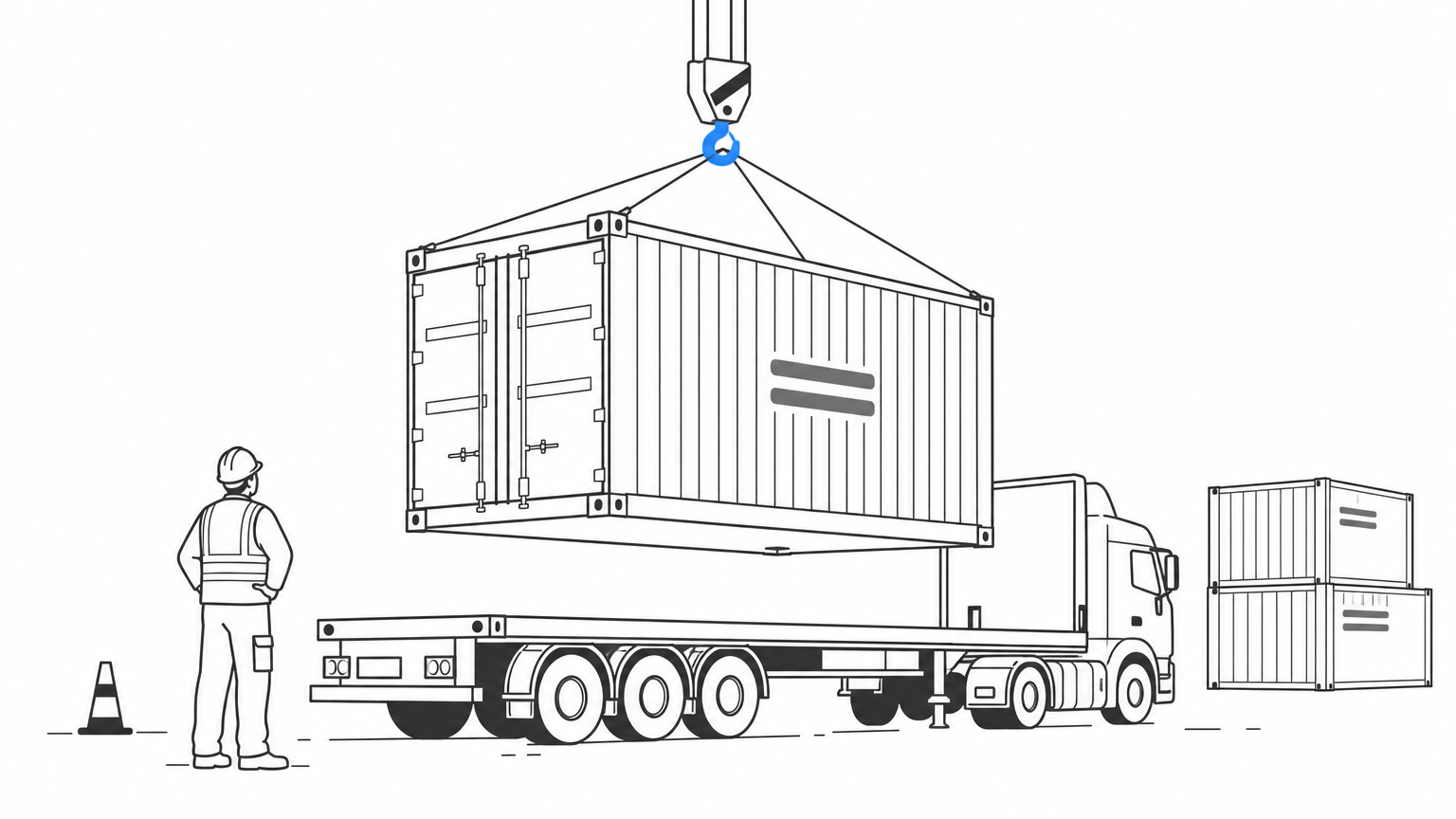
Most European roads cap standard truck axle loads well below the maximum gross weight of 30,480 kg, so if you're moving a fully loaded 20ft container, you'll likely need a permit or a specialized tilt-bed transporter. Empty containers rarely trigger these limits, but once you're shipping cargo, dunnage, or a converted unit with plumbing and fixtures installed, the numbers add up fast. Always confirm the loaded weight before booking transport, not after the truck arrives.
If you don't know your container's loaded weight, you don't know if your truck, crane, or foundation can actually handle it.
Site and structural load
A crane rated for 3 tons won't lift a container loaded past that mark, and a concrete pad poured for a light storage unit won't necessarily support a converted office with insulation, drywall, and furniture. This is where the difference between tare weight and gross weight becomes practical rather than academic. Contractors placing containers on job sites need to check both the container's own weight and whatever equipment or stock will sit inside it, especially for stacked or elevated placements.
Why buyers overlook this
Many first-time buyers assume all containers weigh roughly the same, so they skip checking specs entirely. That assumption works fine for a light-duty backyard storage box, but it falls apart quickly for anyone converting a unit into living space, a pool, or a multi-story build, as these shipping container home designs make clear. Getting the numbers right upfront saves you from re-renting equipment, rescheduling delivery, or reinforcing a foundation after the fact.
How to calculate your container's total shipping weight
Figuring out your total shipping weight starts with a simple formula: tare weight plus cargo weight equals gross weight, and that gross weight can never legally exceed the container's rated maximum. Grab your container's CSC plate, the metal data plate riveted near the door, and you'll find the tare weight, maximum gross weight, and payload capacity stamped right on it. Skip the plate and you're guessing, which is how overloaded trucks end up flagged at weigh stations.
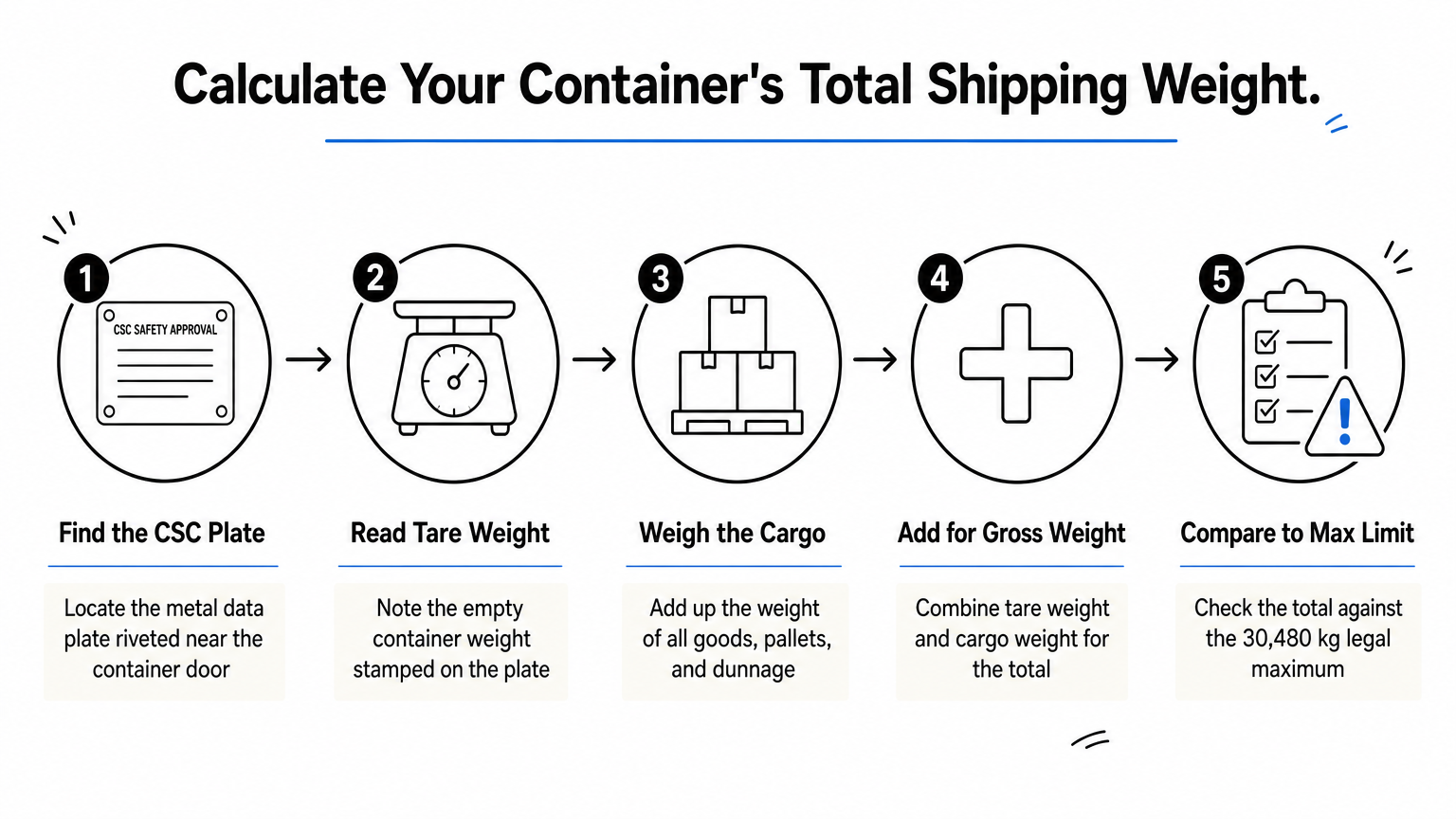
Add your cargo weight to the tare weight on the CSC plate, and you'll know instantly if you're within legal limits.
Here's the math laid out step by step:
Tare weight (empty container): ~2,200 kg
+ Cargo weight (goods, pallets, dunnage): 20,000 kg
= Gross weight: 22,200 kg

Max allowed gross weight (20ft standard): 30,480 kg
Remaining payload capacity: 8,280 kg
Run this calculation before you load, not after, especially if you're stacking pallets, adding water tanks for a container pool conversion, or fitting out a site cabin with fixtures. Weigh individual items when possible, since estimating cargo weight by eye is where most overloads happen. If you're unsure of your specific unit's tare weight, check the spec sheet on the listing or contact the seller directly. ContainerKaufen lists exact weights per unit, so you can run this math before delivery day rather than after the crane arrives and finds the site unprepared.
20ft container dimensions, capacity and weight limits
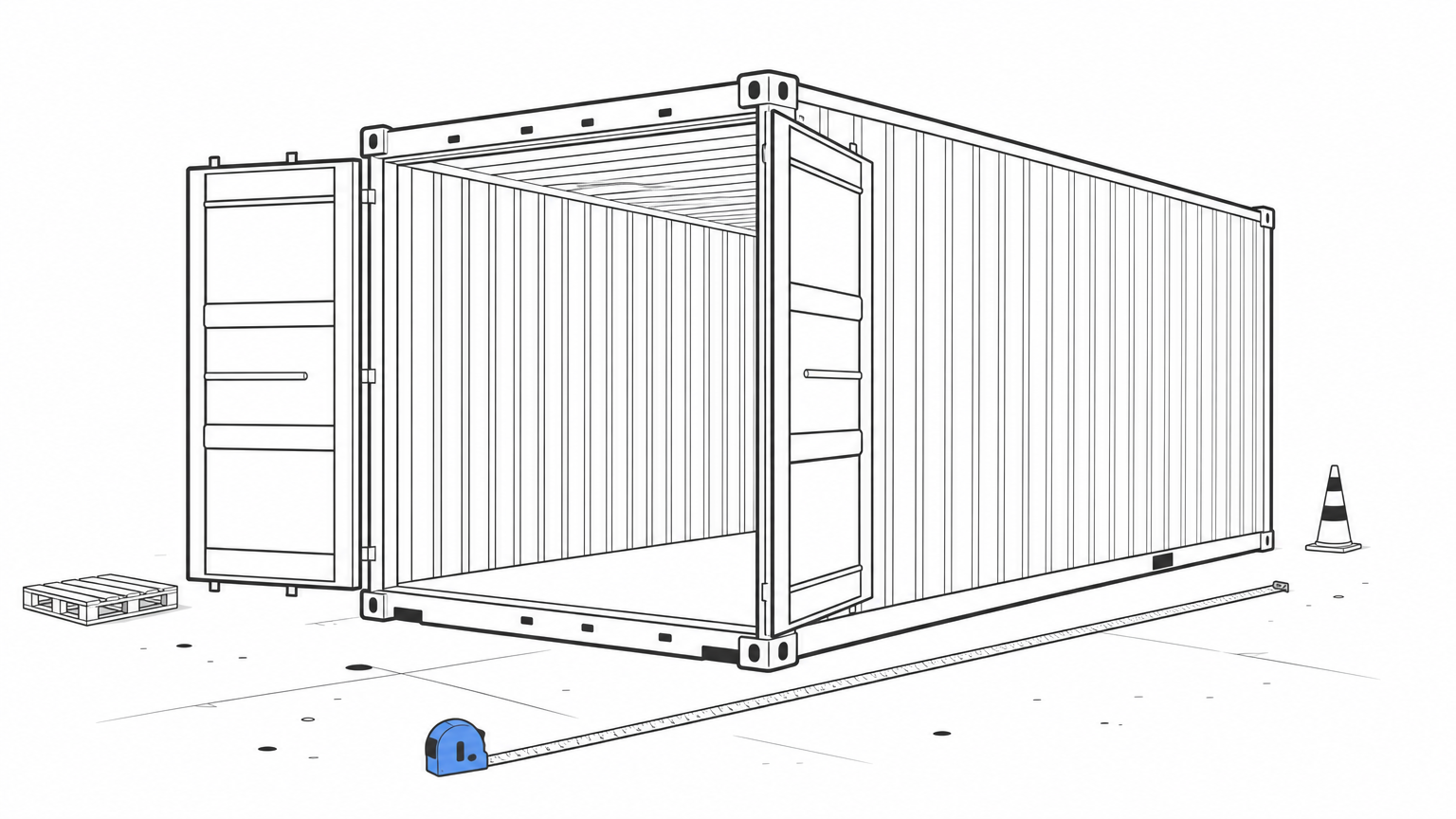
Once you know the weight math, the next question is what actually fits inside. A standard 20ft container measures 20 feet long, 8 feet wide, and 8.5 feet tall on the outside, but the internal cargo space runs slightly smaller once you account for wall thickness and the corrugated steel structure. If you're searching for 20 foot sea container dimensions to plan a build or a shipment, the specs below cover the numbers you'll actually need.
| Spec | Standard 20ft Container |
|---|---|
| External length | 6.06 m (19' 10.5") |
| External width | 2.44 m (8') |
| External height | 2.59 m (8' 6") |
| Internal length | 5.90 m (19' 4") |
| Internal width | 2.35 m (7' 8.5") |
| Internal height | 2.39 m (7' 10") |
| Door opening | 2.34 m x 2.28 m |
| Cubic capacity | ~33 cubic meters |
| Tare weight | 1.9 to 2.3 metric tons |
| Max gross weight | 30,480 kg |
| Max payload | ~28,180 to 28,580 kg |
A 20ft container holds roughly 33 cubic meters of cargo, but its steel walls and floor eat into that space, so measure the internal dimensions, not the external ones, when planning a load.
Specialized variants shift these numbers. High cube 20ft units add roughly 30 cm of internal height, which increases both cubic capacity and, marginally, tare weight. Refrigerated containers carry insulation and cooling units, pushing tare weight up by several hundred kilograms compared to a dry standard box, so always check the specific unit's plate rather than assuming standard figures apply.
How a 20ft container compares to 10ft and 40ft units
Sizing up a 20ft container against its smaller and larger siblings helps you decide whether you actually need the extra length or if a compact 10ft unit covers your storage needs. Weight scales roughly with size, but not perfectly, since wall thickness, corrugation, and door hardware stay fairly consistent across models. That means a 40ft container isn't simply double the weight of a 20ft one, it's proportionally lighter per cubic meter thanks to shared structural components.
Bigger isn't always heavier per square foot, a 40ft container packs more storage into less added weight than you'd expect.
Buyers choosing between sizes should weigh capacity needs against site access, since a 40ft unit needs more room to maneuver during crane-off delivery and a heavier max gross weight to plan for on soft ground.
| Container Size | Tare Weight | Max Gross Weight | Internal Volume |
|---|---|---|---|
| 10ft | ~1.2 to 1.4 tons | ~10,000 kg | ~15 cubic meters |
| 20ft | ~1.9 to 2.3 tons | 30,480 kg | ~33 cubic meters |
| 40ft | ~3.6 to 3.9 tons | 32,500 kg | ~67 cubic meters |
Contractors juggling multiple job sites often stock a mix, a 10ft unit for tight urban lots, a 20ft for general storage or conversions, and a 40ft when volume matters more than footprint. Private buyers usually land on the 20ft size since it balances portability, cost, and usable space without demanding oversized transport permits or a reinforced foundation.
Picking the right container for your load
At this point, you know a 20ft shipping container weight runs roughly 1.9 to 2.3 tons empty and can carry up to 30,480 kg gross. You've got the dimensions, the capacity, and how the 20ft size stacks up against 10ft and 40ft alternatives. That's enough to plan your delivery truck, check your site's load rating, and avoid the overload surprises that catch first-time buyers off guard.
Before you commit, match the numbers to your actual job. A backyard storage box doesn't need the same scrutiny as a container home or a pool conversion carrying thousands of extra kilograms in water and fixtures. Get the tare weight, payload, and site access sorted first, then buy.
Ready to see exact specs on in-stock units? Compare the best container houses for sale and get transparent, depot-direct pricing with the weight and dimension data listed upfront.